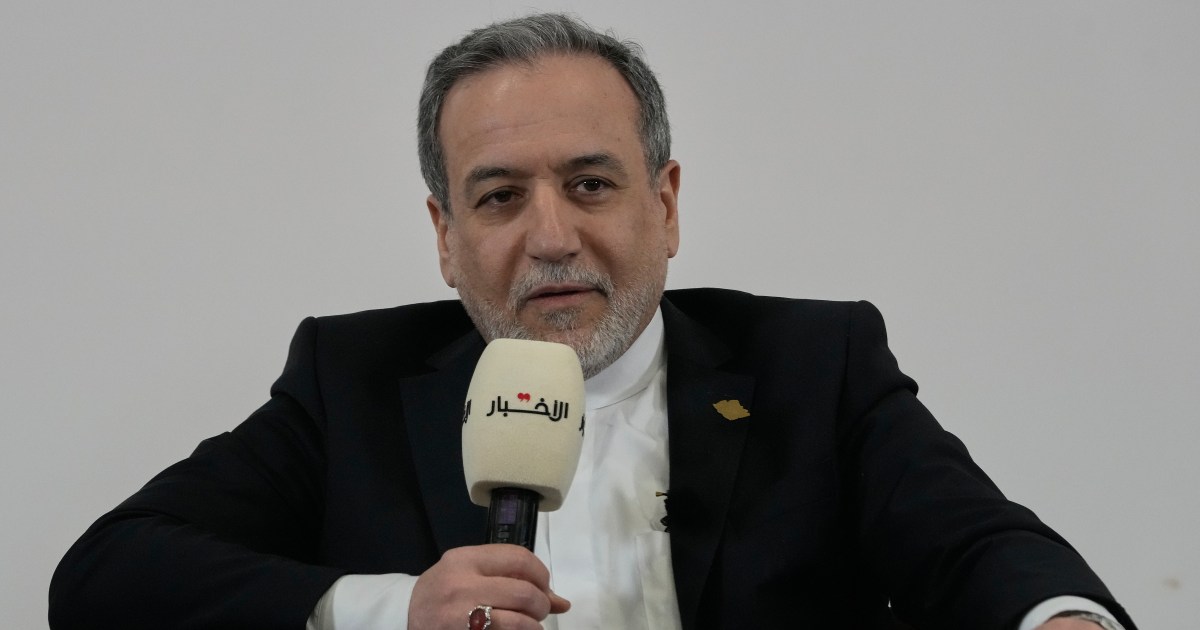
Iran's Minister Araghchi Vows Retaliation After US-Israel Strikes: A Deep Dive into Escalating Tensions
The geopolitical landscape of the Middle East has once again been rattled, with recent coordinated strikes by the United States and Israel against Iran triggering a swift and resolute response from Tehran. In the aftermath of these significant operations, Iran's Foreign Minister Araghchi issued a stern warning, affirming Iran’s determination to retaliate decisively. His statement, emphasizing lessons learned from past conflicts, signals a new, dangerous phase in an already volatile region. This article delves into the specifics of these strikes, Iran's counter-response, and the broader implications of this escalating conflict, where the words of an Iranian minister on attack intent carry immense weight.
The Escalation: A Coordinated Offensive on Iranian Soil
Saturday morning brought with it a dramatic escalation of regional tensions as the United States and Israel launched what President Donald Trump described as "major combat operations" against Iran. These strikes were not isolated incidents but rather a coordinated campaign, targeting what officials indicated were key military, intelligence, and government-linked sites across Iran. The precision and breadth of these operations suggest a well-planned strategy aimed at crippling specific Iranian capabilities and sending a strong message.
In the capital city of Tehran, witnesses reported explosions, with particular focus on areas near the complex of Supreme Leader Ali Khamenei, where roads were quickly sealed off. While Iranian state television confirmed explosions, details regarding their cause and any potential casualties remained scarce. The absence of Supreme Leader Khamenei from public view in the immediate aftermath only fueled speculation, recalling instances during earlier conflicts where he was reportedly moved to secure locations. The targets, according to informed sources, were meticulously chosen to impact the Iranian military, government symbols, and intelligence infrastructure, underscoring the strategic depth of the US-Israeli action.
Both Iran and Israel swiftly reacted to the unfolding events by closing their airspace to civilian flights, a clear indicator of the gravity of the situation. Israel went a step further, declaring a state of emergency and sounding sirens nationwide, signaling a "proactive alert" to prepare its population for potential retaliatory rocket attacks. The international community watched with bated breath as the two long-standing adversaries moved from a state of simmering animosity to overt military engagement. For a deeper understanding of the initial strikes and their immediate fallout, see
US-Israel Strikes Escalate Iran Tensions: Tehran Retaliates with Missiles.
Iran's Vow of Retaliation and Strategic Underpinnings
Amidst the chaos and uncertainty, the voice of Iran's Foreign Minister Araghchi resonated loudly, articulating Tehran's unwavering resolve. "We have learned many lessons from the previous war," Araghchi declared, "and we will certainly teach the aggressors a lesson they fully deserve." This powerful statement from the Iranian minister regarding attack intentions carries multiple layers of meaning. The "previous war" could refer to the devastating Iran-Iraq War (1980-1988), an eight-year conflict that profoundly shaped Iran's military doctrine, emphasizing self-reliance, asymmetric warfare, and the development of robust missile capabilities. Alternatively, it might allude to more recent proxy conflicts and limited engagements, from which Iran consistently draws strategic insights.
Iran's immediate response underscored Araghchi's words. The Islamic Revolutionary Guard Corps (IRGC) swiftly issued a statement announcing the commencement of "the first wave of large-scale missile and drone attacks" against "occupied territories" (referring to Israel) and US military facilities in the Gulf. This direct military response, mirroring the scale and coordination of the initial strikes, showcased Iran's capability and willingness to engage directly. The deployment of both missiles and drones highlights Iran's diverse arsenal, developed precisely to counter superior conventional forces through swarm tactics and standoff capabilities. For more details on the specific targets and Iran's response, consult
Inside the US-Israel Strikes on Iran: Targets and Tehran's Response.
The strategic message embedded in Araghchi's declaration and the IRGC's actions is clear: Iran will not absorb blows without striking back. This principle of "proportional response" is a cornerstone of Iranian defense strategy, aiming to deter further aggression by demonstrating an unacceptable cost. The country's deep understanding of regional dynamics and its complex network of alliances and proxies further complicate any military calculations, transforming a direct confrontation into a multidimensional threat.
Beyond Missiles: The Broader Regional Impact
The reverberations of these strikes extend far beyond direct military engagements. The Middle East, a region perpetually on the brink, now faces an even greater risk of widespread conflict. A significant development in this regard was the announcement by Yemen's Iran-backed Houthi rebels that they would resume attacks on ships. This immediately reignites concerns about global shipping routes, particularly in the vital Red Sea, and could lead to further economic disruption and heightened naval presence by international powers.
The involvement of proxies like the Houthis underscores a critical aspect of Iran's strategic depth. Tehran's ability to activate various non-state actors across the region – from Lebanon to Iraq and Yemen – provides it with significant leverage and complicates any de-escalation efforts. This proxy network allows Iran to project power and exert influence without necessarily engaging its conventional forces directly, thereby expanding the scope and unpredictability of any conflict.
Economically, heightened tensions invariably lead to spikes in global oil prices and increased volatility in financial markets. The prospect of disruptions to oil shipments through the Strait of Hormuz, a critical chokepoint, looms large, threatening the global energy supply. Diplomatically, the crisis presents an immense challenge. Calls for de-escalation from international bodies and individual nations will intensify, but finding common ground between deeply entrenched adversaries will prove arduous. The risk of miscalculation, given the high stakes and rapid exchange of blows, is perhaps the most significant danger, potentially triggering a regional conflagration with global consequences.
Navigating the Tensions: What Lies Ahead?
The immediate aftermath of the US-Israel strikes and Iran's retaliation leaves the region, and indeed the world, in a precarious state. The rhetoric from both sides – with President Trump accusing Iran of developing missiles capable of threatening Europe and calling on the Iranian populace to "take their destiny into their own hands," a sentiment echoed by Israeli Prime Minister Benjamin Netanyahu – suggests objectives beyond mere military deterrence. It hints at a desire for internal change within Iran, adding another layer of complexity to the conflict.
Observers must consider several potential scenarios. One possibility is a de-escalation, where both sides, having demonstrated their capabilities and resolve, step back from the brink, perhaps through back-channel diplomacy or international mediation. However, the depth of animosity and the repeated cycle of aggression make this path challenging. Another, more worrying scenario is a continued tit-for-tat exchange, where each strike begets a counter-strike, slowly but surely dragging the region into a wider war. This could involve an expansion of targets, an increase in the intensity of attacks, or the activation of more proxies.
Understanding these dynamics requires careful analysis of state actors' statements, military movements, and the activities of non-state actors. The world now watches to see if the lessons Araghchi refers to will lead to a measured response designed to restore deterrence, or if the current exchange marks the beginning of a larger, more destructive conflict. The delicate balance of power in the Middle East has been severely tested, and the path forward remains fraught with peril.
Conclusion
The latest round of US-Israel strikes on Iran and Tehran's immediate, robust retaliation marks a dangerous turning point in Middle East tensions. Foreign Minister Araghchi's resolute vow of retaliation, grounded in "lessons learned" from past conflicts, underscores Iran's determination to meet aggression with force. As missiles and drones fly, and proxies are activated, the specter of a broader regional conflict looms large. The international community faces a critical challenge in de-escalating this volatile situation, where the rhetoric and actions of leaders on all sides carry immense weight and the potential for devastating consequences for global stability.